
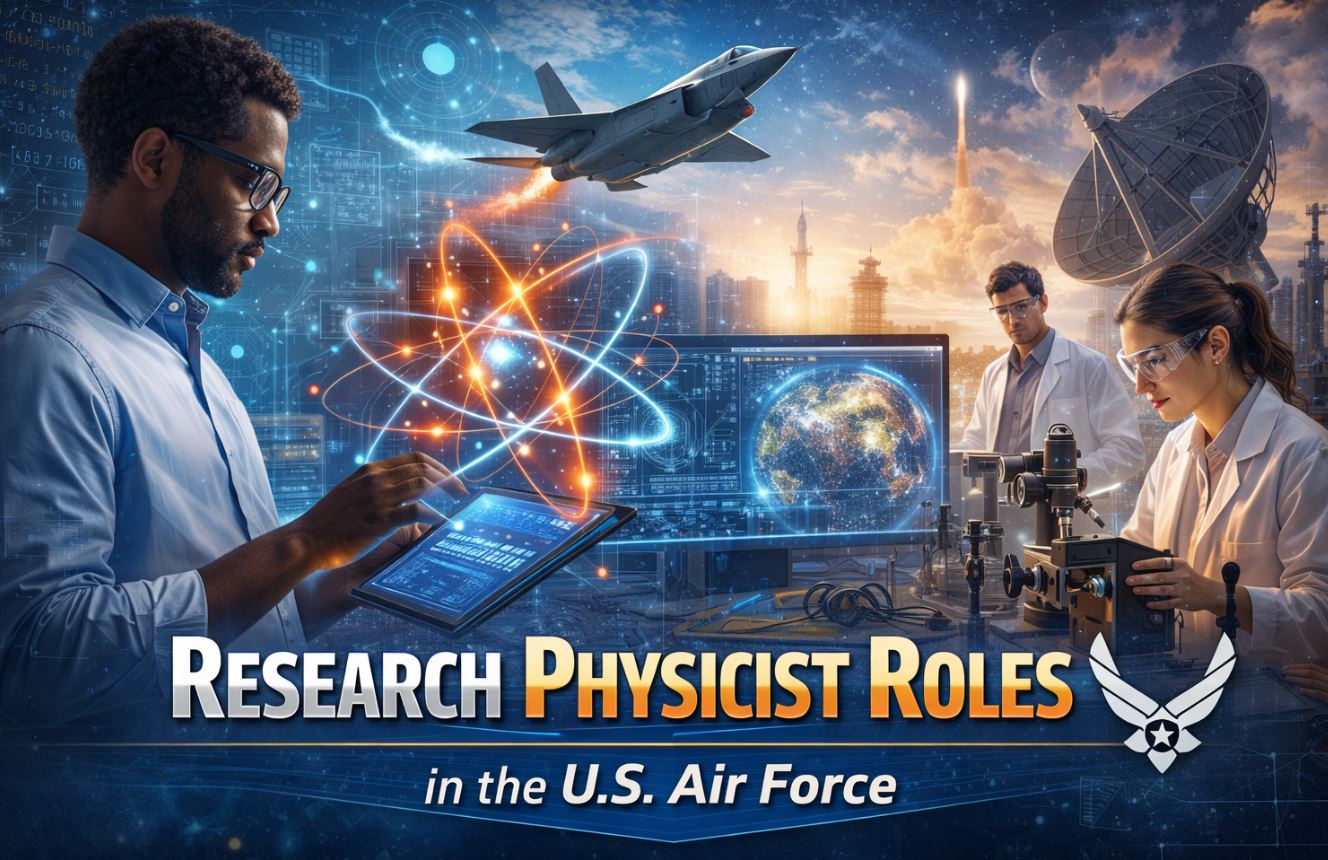
Are you a physics enthusiast with a passion for unraveling the mysteries of the cosmos? Imagine contributing to cutting-edge research on solar activity, space weather, and satellite defense while serving your country. The U.S. Air Force is calling on talented physicists to join their elite team of innovators. These Research Physicist jobs offer a unique blend of scientific discovery, national security impact, and career growth in the fast-evolving field of aerospace physics.
In this post, we’ll dive into the exciting world of Air Force physicist positions, exploring duties, qualifications, locations, and how you can launch your federal career in space research. Whether you’re a recent Ph.D. graduate or a seasoned expert in ionospheric physics, these opportunities could be your gateway to groundbreaking work. Ready to orbit toward your dream job? Let’s explore.
What Does a Research Physicist Do in the Air Force?
As a Research Physicist (Series 1310), you’ll tackle real-world challenges at the intersection of physics, space technology, and defense. This isn’t your average lab coat gig—expect to blend theoretical modeling with hands-on experimentation to safeguard U.S. assets in space.
Core Duties and Responsibilities
Your day-to-day will fuel innovation in geo-space environments. Here’s what you’ll be doing:
- Conduct Basic and Applied Research: Dive deep into solar and solar wind activity, analyzing how they affect the geo-space environment and Air Force systems. Develop innovative techniques for space-based hyperspectral imaging data collection and analysis.
- Lead Space Control Studies: Coordinate comprehensive analyses to support Space Control Operations, ensuring current and future missions are resilient against threats.
- Develop Software Tools: Harness scientific inquiry to create custom software for Space Control analysis. Stay ahead of the curve by attending conferences, briefings, and seminars on advanced technologies.
- Model Threats and Mitigations: Perform applied research on satellite vulnerabilities in orbit, simulating threats and devising defense strategies.
- Collaborate and Innovate: Work with interdisciplinary teams on experimental and theoretical projects, from optical radiation in the atmosphere to laser technology applications.
These roles demand creativity and precision, offering the chance to influence national defense while pushing the boundaries of space weather research careers.
Qualifications: Who We’re Looking For in Physics Experts
The Air Force values expertise in physics fundamentals, so start with a strong educational foundation. But it’s your specialized experience that will propel you forward.
Basic Education Requirements
To qualify, you need:
- A bachelor’s degree in physics or a related field with at least 24 semester hours in physics.
- OR A combination of education (equivalent to a physics major) and relevant experience.
- Key coursework: General physics, plus two from electricity/magnetism, heat, light, mechanics, modern physics, or sound.
Specialized Experience by Grade Level
These positions span GS-11 to GS-15, with tailored experience requirements:
- GS-11: One year at GS-09 level (or equivalent), focusing on experimental/theoretical research in optical radiation and atmospheric mechanisms. OR Three years of graduate education toward a Ph.D.
- GS-12: One year at GS-11, managing diverse, complex technical programs with minimal oversight.
- GS-13: One year at GS-12, designing forecast models, algorithms, and analyzing satellite/ground data for space weather applications.
- GS-14: One year at GS-13, leading innovative programs on upper atmosphere interactions with space systems, including briefings and team guidance.
- GS-15: One year at GS-14, directing major research programs on atmospheric backgrounds for space sensors, setting priorities, and coordinating with global experts.
Key Knowledge, Skills, and Abilities (KSAs)
Stand out with these must-haves:
- Expertise in ionosphere physics and space weather applications.
- Proficiency in optical/laser tech for radiation absorption studies in space.
- Advanced modeling of particulate/molecular effects on military systems.
- Software development skills for spectral data analysis (modern languages required).
- Strong scientific writing, communication, and presentation abilities.
- Hands-on experience with atmospheric measurement equipment.
Part-time, unpaid, or volunteer experience counts—highlight it to showcase your passion for federal jobs in physics!
Locations, Salary, and Perks: Where Physics Meets Opportunity
Prime Locations Across the U.S.
These Research Physicist opportunities are available at strategic Air Force bases:
- Peterson AFB, CO
- Eglin AFB, FL
- Patuxent River, MD
- Offutt AFB, NE
- Kirtland AFB, NM
- Wright-Patterson AFB, OH
- Fort Sam Houston, TX
- Lackland AFB, TX
- Randolph AFB, TX
- Hill AFB, UT
- Pentagon, Arlington, VA
No remote options, but occasional travel adds adventure. Relocation assistance may be available under JTR and AF regs.
Competitive Compensation
- Salary Range: $74,678 – $192,331 annually (varies by location and grade).
- Promotion Potential: Up to GS-15.
- Benefits: Full-time, competitive service with health insurance, retirement, paid leave, and more. Recruitment incentives possible!
Conditions to Know
- U.S. citizenship required; males must register for Selective Service.
- Secret security clearance and suitability/fitness checks.
- Occasional shift work, overtime, or holidays; random drug testing may apply.
- Probationary period and DoD Priority Placement Program provisions.
Why Choose a Career in Air Force Space Physics?
Joining the Air Force as a Research Physicist isn’t just a job—it’s a mission. You’ll:
- Work on classified, high-impact projects that protect satellites and enhance space operations.
- Collaborate with top minds in a supportive, innovative environment.
- Enjoy federal perks like tuition assistance, work-life balance, and pathways to leadership.
- Contribute to national security while advancing your expertise in aerospace physics careers.
In an era of increasing space threats, your work could define the future of orbital defense. Plus, with Direct Hire Authority, the process is streamlined—no lengthy referrals needed.
How to Apply: Your Next Steps to a Stellar Career
Ready to apply? This is a Direct Hire Public Notice (Announcement: AFPC-STEMDHA-12857845-1310), open from December 23, 2025, to December 22, 2026. Applications are gathered as vacancies arise—submit early!
- Tailor Your Resume: Highlight physics coursework, research projects, and KSAs.
- Submit Transcripts: Required if using education to qualify (official verification later).
- Review Eligibility: Open to U.S. citizens; ICTAP for displaced feds.
- Apply Online: Head to USAJOBS for the quick process.
For foreign education, provide equivalency proof. Questions? Visit the USAJOBS help center.
Launch Your Physics Career Today
Don’t miss this chance to blend your love for physics with purpose-driven work. These U.S. Air Force Research Physicist jobs are perfect for those ready to make waves in space weather and beyond. Apply now and secure your spot in the stars!
Original Source Link: https://physics.usajobs.gov/job/853124700